



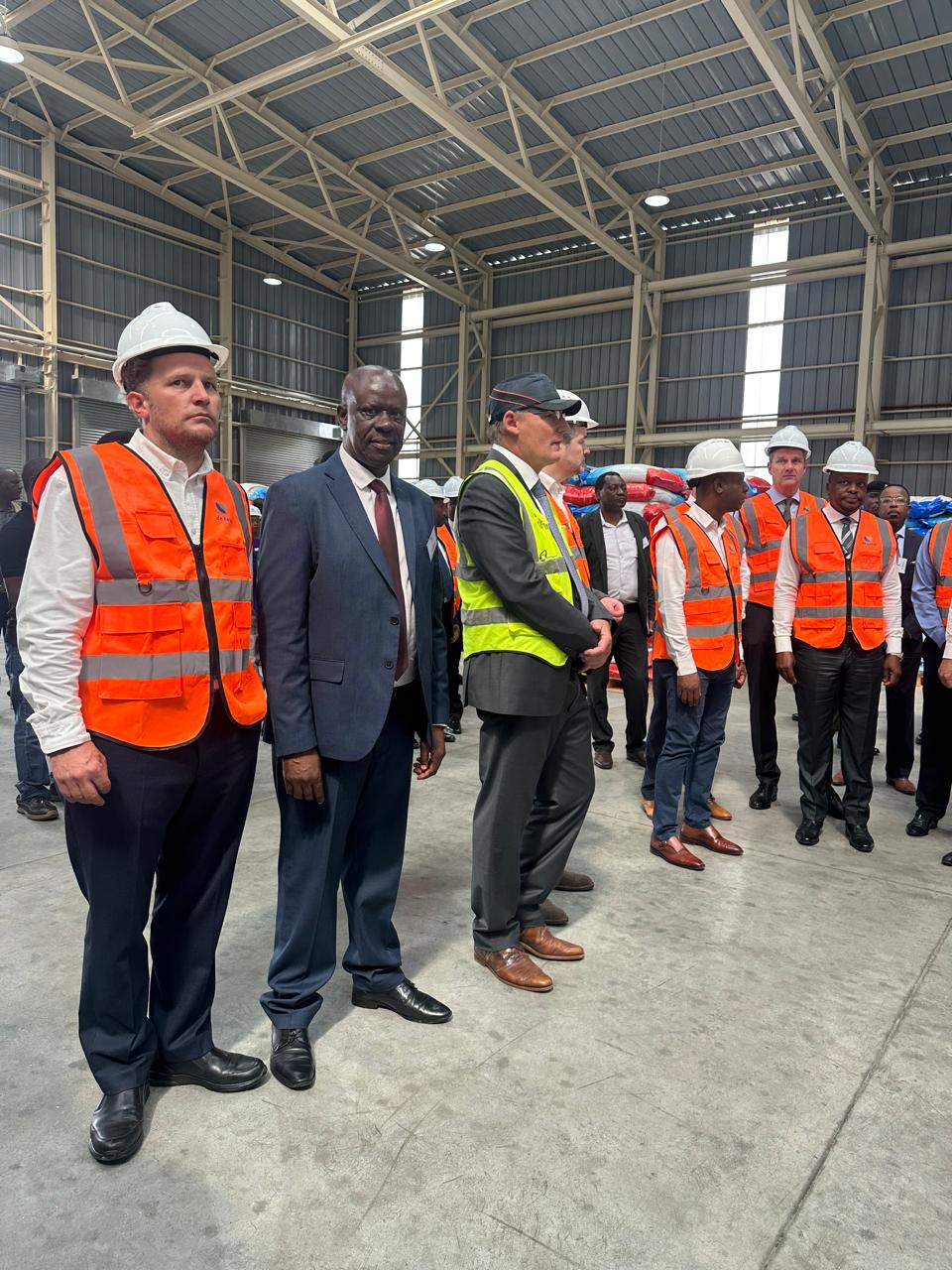
At the official launch of De Heus Kenya’s new animal feed manufacturing facility in Athi River, the Dean of the Faculty of Agriculture delivered a congratulatory address on behalf of the institution. He began by acknowledging distinguished guests, including representatives from De Heus, national and county government leaders, industry partners, farmers, and colleagues from academia, before expressing his excitement at the launch of the state-of-the-art facility.
The Dean congratulated De Heus on the significant investment in Kenya’s livestock and agribusiness sector, noting that the opening of the factory represented more than just the establishment of a manufacturing facility. He emphasized that the project was a clear vote of confidence in Kenya's agricultural potential and the future of its farmers.
He highlighted the importance of the livestock sector to the Kenyan economy, pointing out that the country is home to millions of dairy cattle, poultry, pigs, and a rapidly growing aquaculture sector. These industries, he said, are crucial to the livelihoods of millions of Kenyan households, contributing to food security and nutrition.
However, the Dean acknowledged that productivity within these value chains is often hindered by challenges related to feed availability, quality, and affordability. Despite Kenya’s annual animal feed manufacturing capacity of over 1 million tons, he pointed out that actual production falls short, with significant feed deficits—particularly for dairy and poultry—continuing to affect the sector.
Against this backdrop, he praised the De Heus investment, calling it timely and strategic. The new facility, which will add 200,000 metric tons of high-quality animal feed annually to the market, is expected to narrow the national feed gap. This will help reduce reliance on imported feed inputs and improve feed consistency across the country.
The Dean also noted the company's commitment to sourcing raw materials locally, providing farmer advisory services, and expanding distribution networks. These efforts, he said, would help strengthen value chains, create jobs, and stimulate local economies, especially in Machakos County and surrounding regions.
From an academic perspective, the Dean emphasized the potential for industry-academia collaboration, expressing hope that De Heus would partner with universities to provide internship opportunities, industrial attachments, and pathways to graduate employment. Such partnerships, he said, are essential for developing the next generation of animal nutritionists, feed technologists, veterinarians, and agribusiness leaders who will drive Kenya’s livestock transformation forward.
In conclusion, the Dean wished De Heus great success as the company began operations. He expressed optimism that the company’s impact would extend across Kenya, benefiting both smallholder and commercial producers in sectors ranging from dairy to poultry, pigs, and aquaculture. The success of De Heus, he noted, would be a success for Kenya, contributing to food security, rural incomes, youth employment, and a more resilient livestock sector.
He concluded by reaffirming the Faculty of Agriculture’s commitment to a strong, long-term partnership with De Heus, thanking the company for its investment and looking forward to the continued success of the livestock industry in Kenya.


